In B2B sales and industrial technology, the adage “seeing
is believing” is not just a cliché — it’s a proven truth. From live
demos and hands‑on trials to pilot projects and proof-of-concepts, real
interactions convert far better than brochures, videos, or slide decks alone.
At a major event like Automation Expo 2026, the showfloor becomes your
ultimate conversion engine — if you harness it correctly.
Why Live Demonstrations Have More Persuasive Power
1. Trust &
Credibility Are Built Instantly
When prospects see a machine, sensor, robot, or automation solution functioning in real time, it validates your claims. You shift from “We say we do” to “You can see we do.” This helps overcome skepticism that text, brochures, or even polished marketing videos can’t fully dispel.
2.
Interactivity & Personalization = Engagement
During a live demo, prospects can ask questions on the fly, request alternate scenarios, test edge cases, or push the system. That interactivity reveals objections, needs, priorities — and lets you respond immediately. Such two‑way engagement is far more memorable than passive viewing. As posts in product demo guides point out, demos allow prospects to “reveal their genuine level of interest, budget reality, and decision-making authority.”
3. Faster
Decision Cycles
A demo shortens the buyer’s mental leap from concept to belief. Instead of having to imagine how it works, they see it in action. That reduces uncertainty, a primary obstacle in B2B buying, which can accelerate closing.
4. Risk
Reduction for the Buyer
When you let someone test, experiment, or pilot your solution in a controlled environment, they lower the perceived risk of committing. They can validate compatibility, performance, integration aspects before signing. This is especially crucial in industrial or automation scenarios, where deployment costs, downtime, and integration risks loom large.
5. Competitive
Differentiation
You can compare your live performance, features, speed, responsiveness directly against alternatives. In a crowded expo hall, showing “live superiority” becomes a powerful differentiator. As one write-up argues, demos provide “tangible differentiation opportunities … impossible to achieve through slides or written proposals.”
Why Demos Matter Even More
1. Complexity
& Technical Depth
Automation solutions (robots, sensors, control systems, machine vision, digital twins) often have deep technical complexity. Describing them in words or diagrams is useful, but seeing them interact in real conditions helps prospects grasp performance, latency, error behavior, UX, and integration — things that can be lost in abstraction.
2. Scale,
Environment, and Real-World Conditions
Industrial automation systems often behave differently under load, noise, vibrations, integration constraints, and real-world data. A live demo that mimics real conditions (or shows real environment behavior) conveys authenticity.
3. Immersive
& Interactive Technologies (AR/VR, Digital Twins)
Using AR, VR, or digital twin overlays enables you to augment demonstrations with simulations, cross-sections, “what-if” scenarios, and internal views. These tools can enhance live demos by providing context, comparisons, and deeper insight. In manufacturing and industrial sectors, these interactive demos are increasingly used to let prospects explore interior mechanisms or system behavior visually.
4. The
Showfloor as a Decision Forum
At expos like Automation Expo 2026, many decision-makers, integrators, end users, and influencers gather in a condensed timeframe. A live demo becomes a stage to convert interest immediately — you’re not waiting for weeks, you have access to prospects onsite.
Tying It to Automation Expo 2026
1. What
Automation Expo 2026 Offers
Automation Expo 2026 (India) positions itself as a platform where companies can unveil smart solutions, connect with CEOs, system integrators, and achieve business conversions. It markets itself as a “live stage for unveiling new products, technologies, and solutions” to a global audience.
The expo is a high-stakes environment where 65,000+ qualified buyers, decision-makers, and influencers are expected to converge. Automation Expo India In that context, relying solely on static materials or passive displays is a major missed opportunity.
2. The Role of Demonstrations at Automation Expo 2026
· Product launch stage: Use demos for unveiling new automation modules, AI/ML-enabled modules, robotics, or industrial IoT devices.
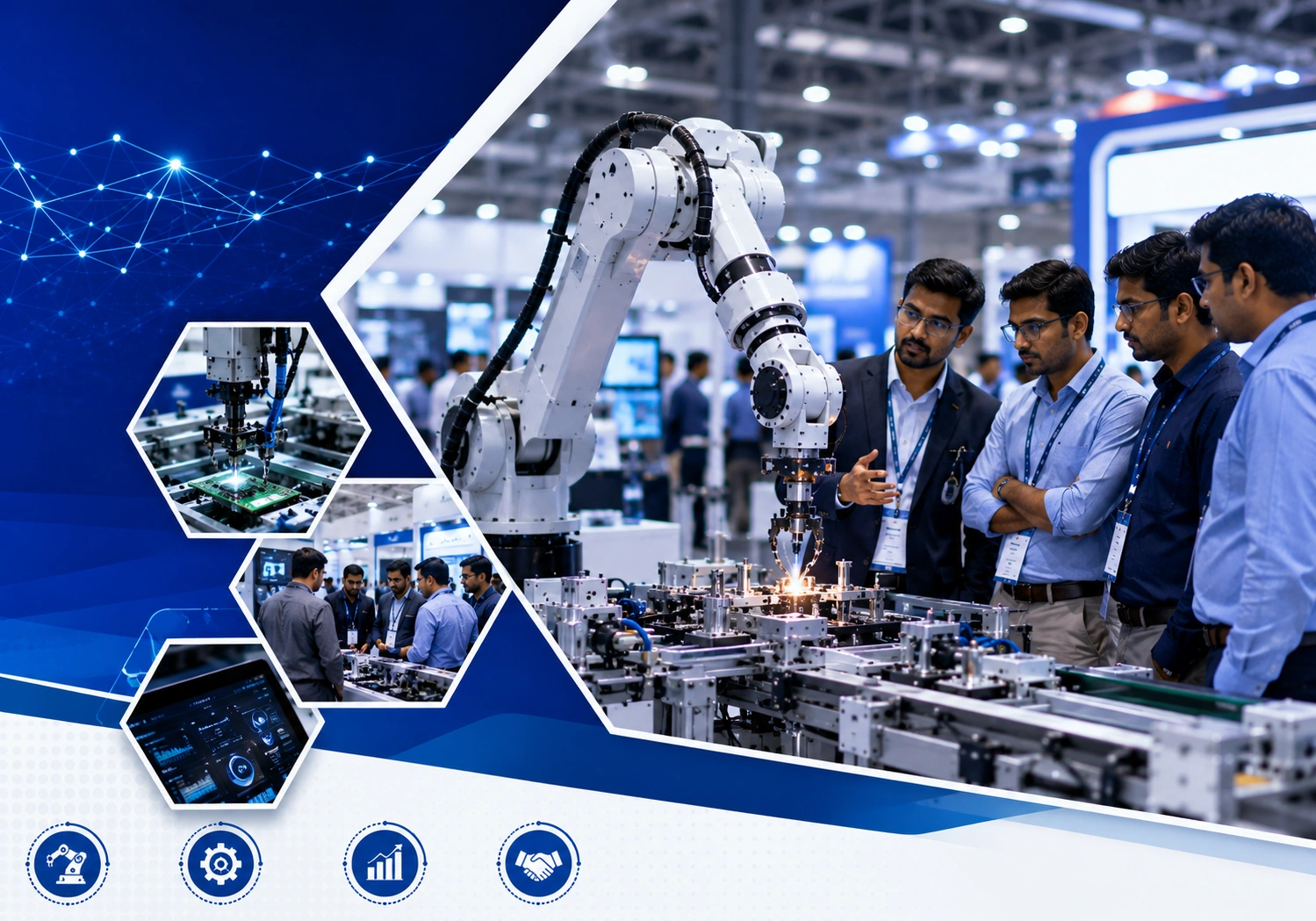
· Booth traffic magnet: A well-running, live demo is a crowd magnet. People stop, ask, enter conversations.
· Upsell & cross-sell platform: Once interest is captured, you can demo add-ons, software modules, or integration features.
· Media / PR visibility: Live demos attract press, social media coverage, PR interest — reinforcing brand credibility.
How to Design Demonstrations That Actually Close Deals
1. Prepare
Audience-Centric Use Cases
Don’t just perform a generic demo. Segment your target personas (e.g. plant manager, automation engineer, systems integrator), and adapt the demo storyline to address their specific KPIs (throughput, downtime, quality, predictive maintenance, etc.).
2. Hybrid
Structure: Showcase + Exploration
· Core scripted portion: deliver a consistent, polished flow covering key value points.
· Interactive portion: allow prospects to “drive” the demo — tweak parameters, run alternate scenarios, change load, test exceptions.
· Q&A / challenge mode: invite the prospect to try edge cases or “break it.”
3. Use
Augmented Reality, Digital Twins, and Overlays
Overlay internal views, compare versions, simulate failures, demonstrate “what-if” scenarios. This layering adds depth beyond the raw hardware demo.
4. Manage
Logistics & Reliability
· Pretest all demo setups (power, connectivity, data, failover)
· Use redundancy or fallback scripts in case of glitches
· Staff with skilled demo engineers (not just salespeople)
· Provide interpreters or region-specific content
· Use signage, crowd management, and demo slots to avoid congestion and waiting
5. Capture
Every Interaction & Follow Up Fast
Track who tried demos, for how long, which features, which edge cases. Use that data to prioritize follow-up, tailor proposals, and re-engage leads.
6. Offer
Post-Show Extensions
Don’t let the demo be a one-off. Offer to continue via remote trials, pilot deployments, or virtual extensions for prospects who couldn’t complete the demo.
Pitfall
Why It Fails
Mitigation
Feature overload
Trying to show everything overwhelms prospects
Limit to 2–3 core benefits; avoid going down rabbit holes
Lack of audience alignment
Demo doesn’t resonate with their pain or priority
Pre-qualify and tailor use cases
Technical failures
Glitches kill credibility
Rigorous rehearsal, backup plans
Poor staffing
Technicians can’t communicate value
Use demo engineers + sales liaison
Waiting time / congestion
Prospects drop off
Use timed slots, multiple demo stations
Lack of data capture
Lost opportunity for follow-up
Use demo analytics, badge scanning, logging
Measuring ROI: From Demo to Deal
· Demo-to-lead conversion rate: % of demo attendees who become qualified leads
· Lead-to-opportunity rate: % who move into deeper engagement
· Deal velocity / cycle time: compare deals that started with demos vs without
· Deal size / margin uplift: do demo-driven deals tend to be larger or more profitable?
· Cost per lead / cost per demo: include demo setup, staffing, materials
· Lifetime value / retention: customers who experienced demos may stay longer or expand more
By comparing these metrics, you can justify demo investments and iterate on which kinds of demos deliver the highest ROI.
Sample Outline: “Live Demo Strategy for Automation Expo 2026”
1. Pre-Expo
o Define target personas and demo scenarios
o Build demo prototype / pilot version
o Rehearse and stress-test
o Invite key prospects for slots
2. On the Showfloor
o Scheduled mini demos + drop-in demo times
o Hands-on zone / sandbox area
o Demo staff positioning and crowd control
o Real-time lead capture and segmentation
3. During & Post-Demo Engagement
o Collect feedback, challenge requests, observations
o Immediate follow-ups: share recordings, whitepapers, trial access
o Setup pilot deployments or deeper trials
o Use demo analytics for lead scoring
4. Post-Expo
o Nurture demo leads
o Compare performance vs non-demo leads
o Iterate demo flow, presentation, collateral
At Automation Expo 2026, your showfloor is more than a display space: it’s your conversion arena. Live demonstrations — when designed thoughtfully, executed reliably, and tied to follow-up — can differentiate you, reduce buyer risk, accelerate decisions, and drive deals that might never happen from brochures alone.