Discover how Artificial Intelligence (AI) and the Industrial Internet of Things (IIoT) are transforming smart manufacturing through connected machines, predictive maintenance and data-driven decision-making.
Imagine knowing that a production machine may need maintenance before it breaks down. Imagine tracking production performance in real time, identifying quality issues earlier and making operational decisions using actual factory data instead of guesswork.
This is the promise of AI and IIoT in manufacturing. By connecting industrial equipment, collecting meaningful data and applying intelligent analysis, manufacturers can gain better visibility into their operations and discover opportunities to improve efficiency.
As industries move towards smarter production systems, AI and IIoT are becoming important technologies in the evolution of industrial automation.
What Are AI and IIoT in Smart Manufacturing?
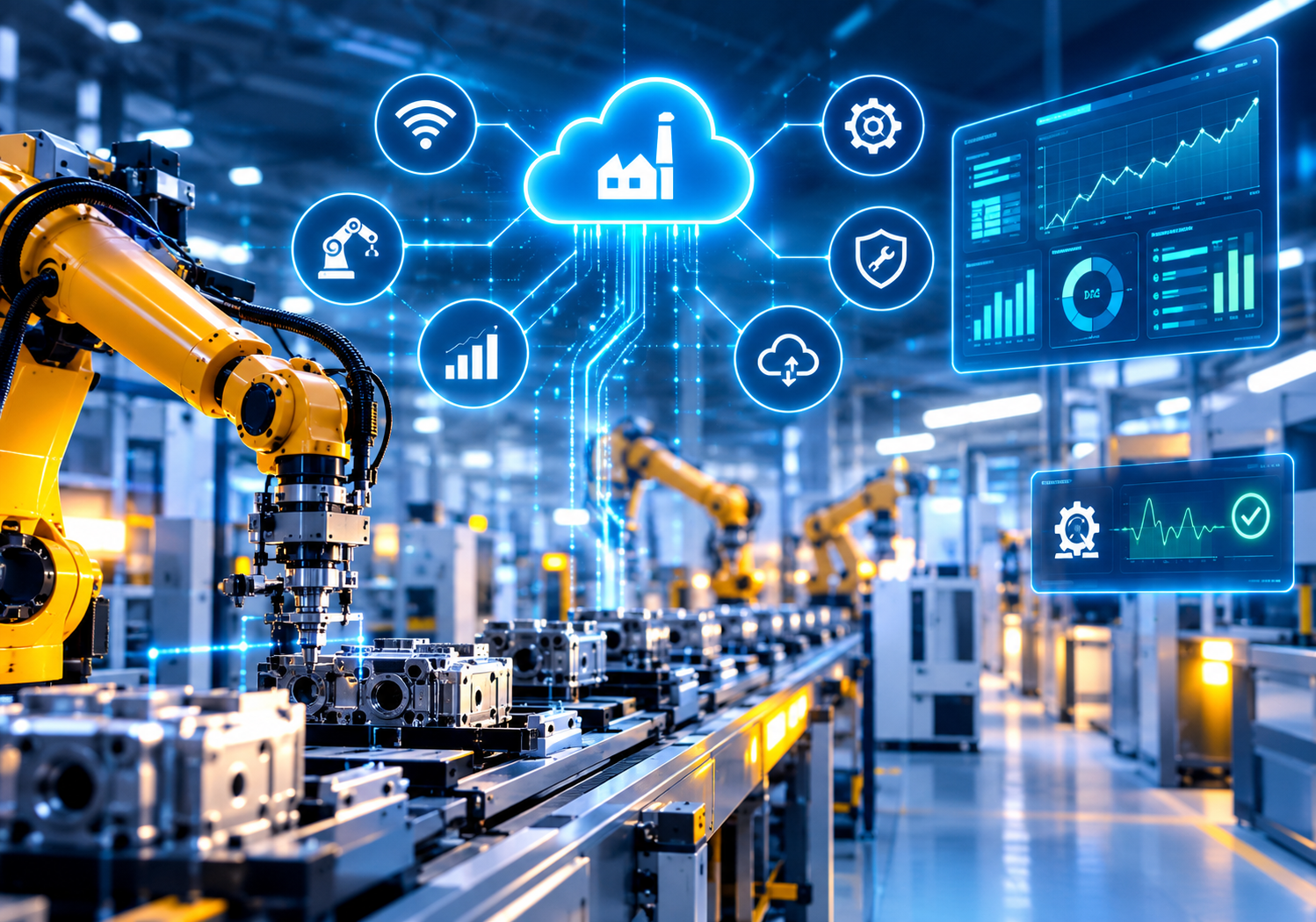
The Industrial Internet of Things (IIoT) connects industrial machines, sensors, controllers and other equipment to systems that collect and exchange operational data. This data can reveal information about machine performance, production speed, energy consumption and equipment conditions.
Artificial Intelligence (AI) adds another layer of intelligence. AI-powered systems can analyse large volumes of data, identify patterns, detect anomalies and support predictions or recommendations.
Together, AI and IIoT in smart manufacturing help businesses move from simply collecting information to using it more effectively.
The result is a more connected manufacturing environment where decisions can be informed by real-time insights and historical performance.
1. Connected Machines, Better Production Visibility
When machines operate without sharing useful information, understanding the complete production process can be difficult. Delays, bottlenecks and performance issues may go unnoticed until they affect output.
IIoT-enabled systems can bring information from connected equipment into dashboards and monitoring platforms. Depending on the implementation, production teams can track machine status, operating conditions, cycle times and other key performance indicators.
This visibility helps managers understand where production is progressing smoothly and where attention may be needed.
For manufacturers looking to improve operational efficiency, connected machines provide a stronger foundation for informed decision-making.
2. Predictive Maintenance: Spot Problems Before They Escalate
Unexpected equipment failure can disrupt production schedules, increase maintenance costs and affect delivery commitments.
Traditional maintenance strategies often rely on fixed schedules or action taken after a fault occurs. Predictive maintenance offers another approach by using equipment data to identify signs of potential problems.
Sensors may monitor factors such as temperature, vibration and pressure. AI models can analyse these readings alongside historical patterns to identify unusual behaviour and, where sufficient data is available, estimate the likelihood of equipment failure.
This can help maintenance teams investigate developing issues and plan interventions more effectively.
Although predictive maintenance cannot eliminate every breakdown, it can support a more proactive approach to equipment reliability.
3. Data-Driven Decisions That Improve Efficiency
Manufacturing generates enormous amounts of information, but data becomes valuable only when it helps solve a real problem.
AI-powered analytics can help identify recurring production delays, unusual energy consumption, process variations and potential quality issues. When these insights are combined with operational knowledge, businesses can make more informed decisions about scheduling, maintenance and process improvements.
For example, a manufacturer may discover that a particular machine consistently slows down during a specific production stage. Investigating this pattern can help identify the underlying cause and guide corrective action.
The objective is simple: turn factory data into useful decisions.
4. AI and IIoT: Building the Factory of Tomorrow
The next stage of smart manufacturing involves integrating connected equipment, industrial software, automation systems and AI-driven analysis into a more coordinated production environment.
However, successful implementation requires more than installing sensors or adopting new software. Businesses need reliable data, secure connectivity, suitable infrastructure and clear objectives.
Starting with a specific challenge—such as reducing downtime, improving quality or monitoring energy use—can help manufacturers identify the right technology and measure its value.
With a practical strategy, AI and IIoT can support continuous improvement while helping businesses prepare for evolving industrial demands.
Discover the Future of Automation at Automation Expo 2027
The future of manufacturing will be shaped by technologies that connect machines, improve visibility and help businesses make smarter decisions.
Automation Expo 2027 offers an opportunity for industry professionals to explore innovations across industrial automation, robotics, AI, IIoT and smart manufacturing.
Whether you are evaluating connected production systems, exploring automation solutions or looking for new technology partnerships, the exhibition is a platform to discover what is possible and connect with the wider industrial ecosystem.
Event Details
Dates: 2–5 June 2027
Venue: Hall 2, 3, 4 & 6, Bombay Exhibition Centre, Mumbai
Event: Automation Expo 2027
Factory data is no longer just a record of what happened. When connected with the right technologies and expertise, it can help businesses understand what is happening—and make better decisions about what comes next.
See the possibilities. Explore the technologies. Discover the future of smart manufacturing at Automation Expo 2027.